












Bhutan, the tiny kingdom nestled in the eastern Himalayas, is often referred to as the “Last Shangri-La.” This description isn’t just a nod to the country’s breathtaking landscapes but also to its unique approach to governance, spirituality, and the preservation of its cultural heritage. But is Bhutan truly the last Shangri-La, a paradise untouched by the modern world’s pressures? In this article, we’ll explore what makes Bhutan so special, the concept of Shangri-La, and whether Bhutan lives up to this ideal.
1. Understanding Shangri-La: A Mythic Place of Utopia
The term “Shangri-La” originates from James Hilton’s 1933 novel Lost Horizon. In the book, Shangri-La is a mystical, peaceful valley hidden deep within the mountains, where the inhabitants enjoy eternal youth and tranquility. Hilton’s depiction of Shangri-La as a utopia, untouched by the chaos and stress of the outside world, struck a chord with readers and has since become synonymous with paradise.
But the concept of Shangri-La isn’t just confined to the novel. It has taken on a more universal meaning, representing a place where nature and people coexist in perfect harmony. Could Bhutan be this elusive Shangri-La in real life?
2. Bhutan: A Kingdom of Natural Beauty
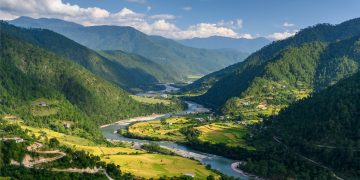
Nestled between China and India, Bhutan is a landlocked kingdom that spans an area of approximately 38,394 square kilometers. Despite its relatively small size, Bhutan boasts one of the most diverse ecosystems on the planet, thanks to its dramatic geographical features, from the subtropical plains in the south to the towering peaks of the Himalayas in the north.
The country’s natural beauty is further enhanced by its rich biodiversity. Bhutan is home to a variety of rare and endangered species, such as the snow leopard, the red panda, and the Bengal tiger. It’s no wonder that Bhutan has long been recognized as one of the world’s most ecologically sustainable nations.
Bhutan’s government has committed to maintaining its environmental integrity, pledging that 60% of the country will always remain under forest cover. In 2008, Bhutan went a step further by becoming the first carbon-negative country in the world, meaning it absorbs more carbon dioxide than it emits. This remarkable feat is largely attributed to the nation’s commitment to conservation and sustainable agriculture.

3. Gross National Happiness: A Unique Metric of Success
While many countries measure success through economic growth and GDP, Bhutan has taken a radically different approach with the introduction of Gross National Happiness (GNH). Introduced by the Fourth King, Jigme Singye Wangchuck, in the 1970s, GNH focuses on the well-being of the people, rather than just their material wealth.
The GNH framework consists of nine domains: psychological well-being, health, education, time use, cultural diversity and resilience, good governance, community vitality, ecological diversity and resilience, and living standards. The goal is to balance economic development with cultural preservation and environmental sustainability.
This holistic approach to national progress, which puts emphasis on happiness and life satisfaction over mere financial gain, sets Bhutan apart from other nations. The GNH philosophy is rooted in Bhutan’s Buddhist traditions, which prioritize spiritual and emotional well-being over material wealth.
4. Bhutan’s Preservation of Culture and Tradition
Another facet of Bhutan’s claim to being the last Shangri-La is its commitment to preserving its cultural heritage. Bhutan is one of the few countries where traditional customs are not only celebrated but also protected by law.
Bhutanese people are deeply rooted in their Buddhist traditions, which shape their daily lives and national identity. The country is dotted with monasteries, dzongs (fortresses), and stupas, which not only serve as religious centers but also as symbols of Bhutan’s enduring commitment to its spiritual heritage.
The Bhutanese government has instituted policies that promote cultural preservation. For example, all Bhutanese citizens are required to wear traditional dress—gho for men and kira for women—on national holidays and during official events. The country’s unique architectural style, characterized by the distinctive white-washed walls of the dzongs and the colorful Bhutanese motifs, further enhances its sense of cultural identity.
In a world where globalization often leads to the erosion of local traditions, Bhutan’s proactive stance in safeguarding its culture is truly remarkable. The country’s rich heritage not only forms the backbone of its national identity but also plays a crucial role in the well-being of its citizens.
5. Spirituality: A Pillar of Bhutanese Life
At the heart of Bhutan’s culture is its deeply ingrained Buddhist spirituality. Buddhism in Bhutan isn’t just a religion; it is a way of life. The teachings of Buddhism shape every aspect of the Bhutanese worldview, from how people interact with each other to how they perceive their relationship with nature.
The importance of spirituality is reflected in the nation’s religious architecture, such as the iconic Tiger’s Nest Monastery, perched on a cliffside in the Paro Valley. This sacred site, which attracts thousands of pilgrims each year, symbolizes the deep connection between the Bhutanese people and their faith.
Bhutan’s rulers have also used Buddhism as a guiding force for governance. The country’s monarchs are considered to be the spiritual protectors of the nation, and their role goes beyond mere politics. The monarchy works closely with religious institutions to ensure that Bhutan’s spiritual and cultural heritage is preserved for future generations.
6. Challenges Facing Bhutan: Can It Maintain Its Utopia?
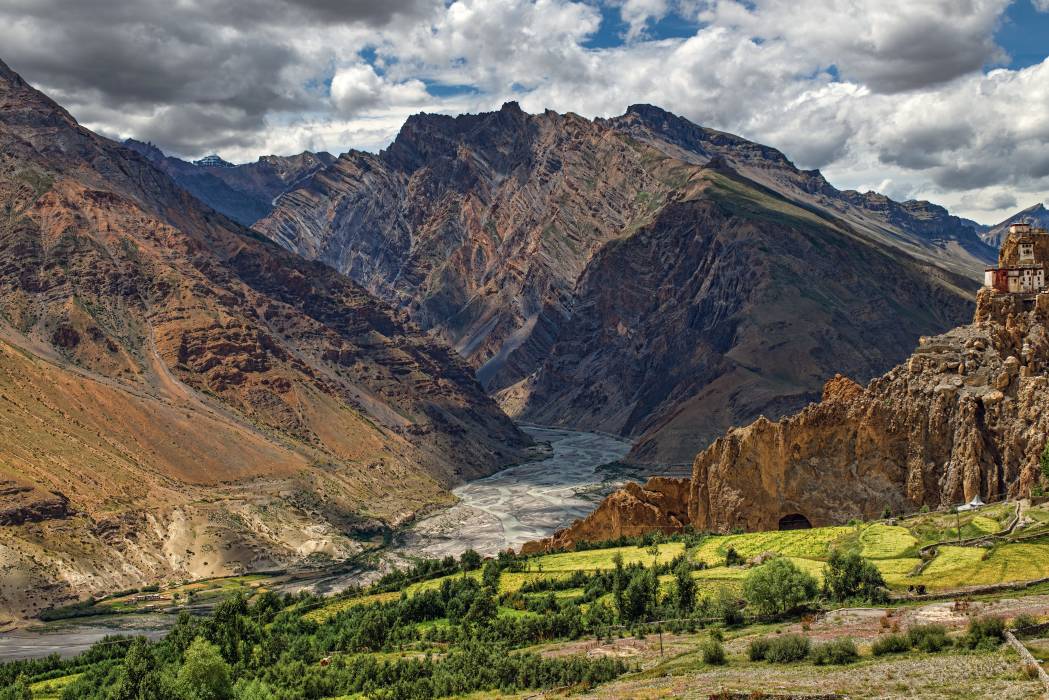
Despite its many virtues, Bhutan faces its own set of challenges. One of the most pressing issues is how to balance modernization with the preservation of tradition. Bhutan has maintained its distinct cultural identity largely because it has been cautious about embracing Western-style development. However, the younger generation, particularly in urban areas like the capital Thimphu, is increasingly exposed to global influences, which could potentially threaten Bhutan’s cultural fabric.
Another challenge is the country’s dependence on agriculture, which is vulnerable to the effects of climate change. Bhutan’s rural economy, which relies heavily on subsistence farming, could be severely impacted by changing weather patterns, particularly the melting of glaciers that supply the country’s freshwater.
Moreover, Bhutan’s relatively small population—approximately 800,000—limits its ability to scale up certain industries or infrastructure projects, which could hinder its development in the future. While Bhutan’s commitment to preserving its environment and culture is commendable, the nation must navigate these complex issues in a way that doesn’t compromise its unique way of life.
7. Is Bhutan the World’s Last Shangri-La?
Bhutan undeniably embodies many of the qualities associated with the mythical Shangri-La. Its stunning landscapes, commitment to environmental sustainability, dedication to cultural preservation, and holistic approach to happiness all make it a unique and enchanting place on Earth.
However, calling Bhutan the “Last Shangri-La” may oversimplify the complexities of the country’s challenges. While Bhutan has succeeded in creating a rare balance between tradition and progress, it must continue to adapt and evolve in order to preserve its idealized vision of paradise.
The idea of Shangri-La itself is a myth—an unattainable ideal of perfection. Bhutan, while close to this ideal in many respects, is still a living, breathing country with its own set of modern challenges. In this sense, Bhutan may not be the “Last Shangri-La,” but it remains one of the most inspiring examples of a society that has managed to hold on to its spiritual and cultural roots in a rapidly changing world.
8. Conclusion: Bhutan’s Unique Place in the World
Bhutan’s claim to be the world’s last Shangri-La is more than just a romantic notion. The country’s unique approach to governance, its deep cultural and spiritual roots, and its commitment to environmental sustainability make it one of the most exceptional nations on Earth. While it may not be a perfect utopia, Bhutan represents an inspiring vision of how a country can embrace modernity while remaining true to its traditions.
As the world continues to change, Bhutan stands as a beacon of hope for those who believe in the possibility of creating a harmonious and sustainable future. It serves as a reminder that true happiness is not found in material wealth but in the well-being of people, the preservation of culture, and the stewardship of the natural world.