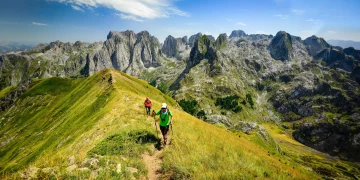


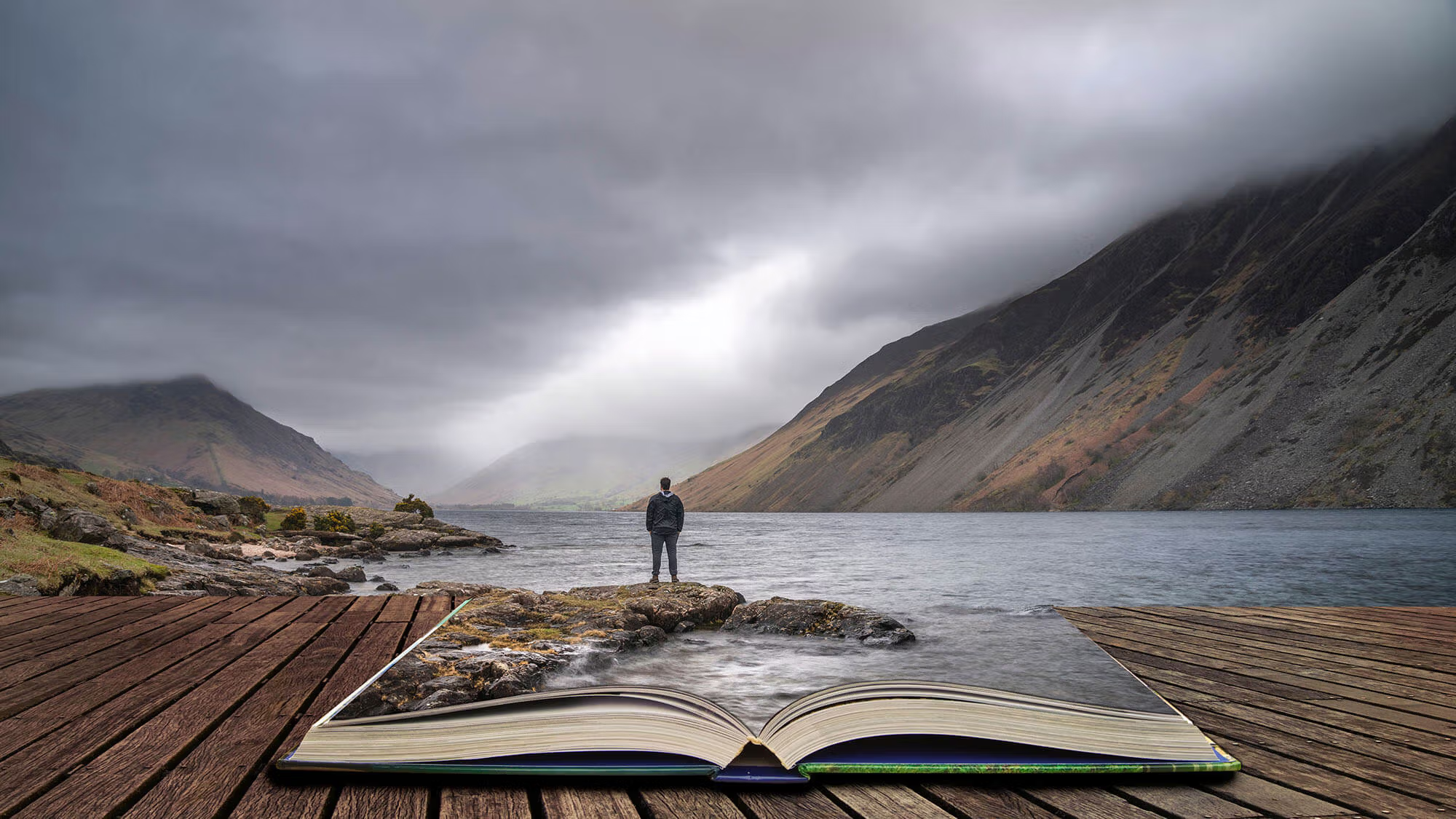










Imagine if the trails we walk—whether winding through forests, skimming across mountain ranges, or snaking along riversides—could speak. What stories would they tell? What secrets would they reveal about the history beneath our feet, the ecosystems they weave through, or the countless explorers who have journeyed along their paths? The answer is more layered than we might expect. Trails, in all their simplicity, are not just physical paths; they are archives of nature’s history and humanity’s connection to the land. If trails could talk, they would share tales of ancient times, quiet moments of transformation, and perhaps even warn us about the future.
The Silent Witness to Nature’s Evolution
The first secret a trail would likely share is the deep history it holds—far beyond human memory. Nature evolves constantly, and every trail is a testament to this slow, but perpetual, transformation. Trails in the mountains may speak of tectonic shifts, of seismic events that reshaped the land, creating jagged cliffs and winding valleys. They would recount the way glaciers once carved through the landscape, leaving behind moraines and rock formations that tell stories of a time long past. Trails through the desert might whisper of ancient seas, now long evaporated, their salt flats and dry riverbeds silently witnessing the passing of millennia.
In fact, trails often reveal layers of history that many never notice. For example, an old dirt path may seem inconspicuous, but a closer look can unveil fossils, remnants of previous civilizations, or unique geological features hidden beneath a layer of dirt. A trail can act as a bridge between epochs, a reminder of how landscapes change, yet remain in constant flux. If trails could talk, they would remind us that nature is not static, but ever-evolving, filled with quiet transformations that, while slow, are relentless.
The Secrets of Ecological Relationships
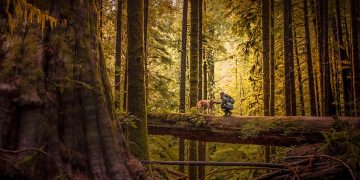
Beyond the geological, trails would have much to say about the interconnectedness of life. Every trail traverses through ecosystems teeming with life—be it the deep forests of the Pacific Northwest, the arid outbacks of Australia, or the tropical rainforests of South America. Trails would share the stories of symbiotic relationships that play out right beneath our feet.
They could tell of how certain plants, like the mycorrhizal fungi, form a hidden underground network that connects trees and plants, enabling them to share nutrients and warnings about pests. Trails might speak of the deep bond between pollinators, such as bees and butterflies, and the flora they sustain. Some trails pass by towering sequoias, trees that have lived for thousands of years, enduring fires, droughts, and human encroachment. If these trails could share their wisdom, they might highlight the resilience of nature and the intricate dance between species, each relying on the other in a delicate web of survival.

The language of a trail would reveal the constant interaction between species—how animals use trails to navigate the terrain, whether it’s a deer’s quiet path through the woods or a bear’s trail winding through berry-filled thickets. These creatures leave behind clues, such as tracks, scat, and broken branches, creating a story that continues even after they’ve passed.
Some trails, particularly those through wetlands, might also speak of water’s essential role in shaping the landscape. Wetlands are among the most biodiverse ecosystems on Earth, and trails passing through these areas would share the complex relationships between aquatic plants, amphibians, insects, and migratory birds. Each ecosystem has its own rhythm, and trails provide a unique perspective on the subtle, often unnoticed, ways in which life thrives. If the trail could talk, it would be like listening to the pulse of the Earth itself.
Human Stories Written in Footsteps
Of course, no trail is without the imprint of human hands and feet. If trails could speak, they would tell of the people who have walked them before us—both those who left obvious marks on the land and those whose presence remains invisible, yet indelible. Trails are like living memoirs, recording the experiences of hikers, travelers, and adventurers, each person adding their own chapter to the book of the trail.
Historical trails, such as those forged by indigenous peoples, early explorers, or pioneers, would have some of the most riveting stories to share. In North America, trails like the Oregon Trail and the Appalachian Trail are steeped in the stories of settlers who crossed vast and unforgiving terrain in search of new homes. These trails could recount the hardships, triumphs, and tragedies of those who passed through them, weaving in stories of survival, hope, and community. Some trails may even hold the memories of more somber events—battles, betrayals, and the long struggles for land and resources.

The trails of indigenous peoples might tell a much older and more intimate story. These trails are not only practical paths for hunting, gathering, and trading; they are also cultural markers that lead to sacred places, each step taken in reverence. In places like the Pacific Northwest or the Great Plains, trails are deeply embedded in the spiritual practices of the communities that have lived there for thousands of years. These trails would share how humans have moved through these landscapes with respect for the land, following seasonal cycles, migrating animals, and the rhythms of nature. If these trails could speak, they would echo with stories of culture, spirituality, and a harmonious existence with the environment.
Modern-day trails, whether those in national parks or new hiking routes that emerge every year, are no less rich in stories. They are the paths of adventure, self-discovery, and connection to the wild. These trails would tell of the thousands of footsteps that have wandered along them in search of solitude, beauty, or simply the thrill of adventure. Some trails would laugh about the hikers who got lost, others would recount moments of quiet contemplation, and many would tell of brief encounters with wildlife, surprising views, and the simple joy of stepping into the unknown.
The Warning Signs—Trails as Sentinels
As much as trails are witnesses to the past, they are also barometers for the present and future. A trail may seem to be a mere path leading through nature, but it can also be a warning sign—a marker of environmental health, or, in some cases, decline. If trails could speak, they might give us insight into the current state of the planet, shedding light on how we are impacting the environment.
For example, trails that once wound through lush forests may now lead to barren landscapes, with trees felled by logging, wildfires, or disease. A trail through the rainforest might reveal signs of deforestation, where once-dense canopies have given way to cleared land. Trails in places affected by climate change might share stories of shrinking glaciers, receding coastlines, and desertification.
But trails could also share stories of resilience. After all, nature has a remarkable ability to heal itself. Trails through areas affected by natural disasters or human intervention might showcase how ecosystems slowly bounce back, with new growth sprouting where devastation once took place. These trails would speak of the delicate balance between destruction and renewal, reminding us that nature has its own way of restoring harmony.
A trail passing through a once pristine river might tell of water pollution or encroaching development. In these cases, trails would act as a silent yet powerful reminder of the fragility of our natural environments, urging us to act before these places are lost forever. As sentinels of the earth, trails hold within them the key to understanding our relationship with the land—and the responsibility we carry to preserve it.
Conclusion: Listening to the Trails
If trails could talk, they would not only speak of the past but also guide us into the future. They are living records, holding stories of nature’s transformations, the creatures and people who have passed through them, and the changing world around us. As we hike, walk, or run along these trails, we become part of a much larger narrative—one that spans across time, nature, and human endeavor.
So, the next time you find yourself on a trail, pause and listen. Though the trees may whisper in the wind and the birds may sing overhead, there are deeper stories waiting to be heard, written in the soil, rocks, and water beneath your feet. Every trail holds a secret. What will it reveal to you?