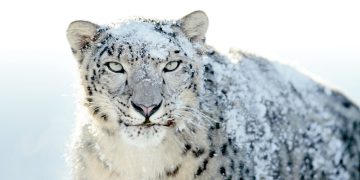













The Himalayas—home to towering peaks, the world’s highest mountains, and some of the planet’s most elusive and mysterious wildlife. Among them, one creature reigns as both a phantom of the mountains and a symbol of wilderness: the snow leopard. With its thick, smoky-gray coat speckled with rosettes, it blends seamlessly into the rugged, snow-dusted landscape, earning it the nickname “ghost of the mountains.” This article will explore the elusive nature of snow leopards, the challenges of tracking them, and the vital role they play in the ecosystem of the Himalayas.
The Ghostly Snow Leopard: An Overview
Snow leopards (Panthera uncia) are solitary, elusive big cats that range across the high-altitude regions of the Himalayas and Central Asia. Their fur, a beautiful blend of gray, silver, and white, allows them to blend perfectly with the rocky and snowy terrain in which they live. With large, muscular bodies and long tails, snow leopards are adapted to survive in one of the harshest environments on Earth. They can thrive in temperatures as low as -40°F (-40°C), navigating the rugged cliffs and snowy slopes with ease.
Despite their adaptations, these leopards are notoriously difficult to observe, and even harder to track. Their solitary nature, combined with their camouflage and their preference for remote, inaccessible terrain, makes them a challenge for both scientists and conservationists. Snow leopards often move silently through the mountains, their large paws designed for stealth and to prevent them from sinking into deep snow. This ghostly behavior, combined with the sparse human population in these high-altitude regions, makes sightings incredibly rare.
Habitat: The Himalayan Heartland
Snow leopards are typically found in the high, cold deserts of the Himalayas, but their range also extends across other parts of Central Asia, including the Tibetan Plateau, the Karakoram Range, and the Pamir Mountains. These vast, barren landscapes are often above the tree line, where the land is inhospitable to most other wildlife.
The Himalayas, home to some of the world’s most famous mountain ranges, offer a dramatic backdrop for the snow leopard’s lifestyle. This environment, with its rocky cliffs, steep slopes, and alpine meadows, is challenging even for the hardiest creatures. The high-altitude grasslands and scrub forests offer plenty of prey for snow leopards, including ibex, blue sheep, and other mountain ungulates, while the rugged cliffs provide the perfect cover for stalking their quarry.
But the Himalayas aren’t just a place of beauty and solitude for snow leopards; they are a refuge in an increasingly encroaching world. The snow leopard is often forced into remote areas to avoid human activity. Yet, even in these isolated regions, human activities—like poaching, habitat destruction, and climate change—threaten their survival. As a result, the Himalayas, while offering shelter, also present a stark reminder of the delicate balance between nature and humanity.
The Challenges of Tracking Snow Leopards
Tracking snow leopards is an endeavor that combines cutting-edge science with old-fashioned detective work. These cats are masters of concealment, using their camouflage to stay hidden from both their prey and any human observers. Unlike more common big cats like lions or tigers, snow leopards do not have an obvious territory, and their solitary nature means they can range over vast distances, sometimes covering hundreds of miles in search of food or mates.
1. The Stealth of Snow Leopards
Snow leopards are expert hunters, relying on stealth and surprise to capture their prey. They are often active at dawn or dusk, stalking through the mountainside silently before making a sudden, powerful leap to ambush their target. Their ability to move without leaving much trace is a critical factor in making them so difficult to track.
Their distinctive, round footprints are the most common signs that a snow leopard has passed through an area. However, these prints can quickly disappear in the snow, and their faintness makes it difficult to track them over long distances. Snow leopards also travel across rocky terrain, which can obscure their paw prints, leaving researchers with few signs to follow.
2. The Role of Camera Traps
To overcome the challenge of tracking snow leopards in real-time, conservationists and scientists often use camera traps. These remote cameras are set up in strategic locations, like narrow mountain passes or areas where leopards are known to travel. The cameras are motion-activated and capture images or videos when an animal passes in front of them.
While camera traps have been successful in capturing rare footage of snow leopards, they come with their own challenges. The leopards’ ability to move quickly and silently means that some camera traps may miss them entirely. Furthermore, since snow leopards often inhabit areas with limited access, setting up these cameras requires careful planning and extensive knowledge of their movement patterns.
3. The Role of Local Communities and Trackers
In many parts of the Himalayas, local communities have been instrumental in helping scientists track snow leopards. These communities, often living in remote villages near snow leopard habitat, have a deep knowledge of the landscape and its inhabitants. Many have been trained to identify signs of snow leopard activity, such as claw marks, scat, and fur.
Local trackers can also help by identifying animal prey, which can often lead to finding a snow leopard nearby. However, it takes an extraordinary amount of patience, skill, and local knowledge to track these elusive cats successfully. And even with their help, snow leopards are still incredibly difficult to find.
The Role of Snow Leopards in the Ecosystem

Snow leopards are apex predators in their environment, meaning they play a crucial role in maintaining the balance of the ecosystem. As carnivores, they help regulate the population of herbivores such as ibex, blue sheep, and marmots. By keeping the numbers of these animals in check, snow leopards prevent overgrazing, which could harm plant life and disrupt the overall health of the ecosystem.
In addition to their role in controlling prey populations, snow leopards also have indirect effects on other species in the region. For example, by hunting and killing large herbivores, they create opportunities for smaller predators and scavengers to feed on leftovers. This cascading effect helps to sustain the entire food web.
Snow leopards’ ability to live in such a harsh environment also means they are vital indicators of the health of their ecosystems. As climate change threatens the fragile mountain ecosystems of the Himalayas, the snow leopard’s survival is seen as a barometer for the region’s overall biodiversity. If snow leopards are thriving, it’s a sign that the ecosystem is in good shape. If their numbers are declining, it signals that something is wrong with the environment.
Conservation Efforts: Protecting the Phantom of the Himalayas
Despite their importance to the ecosystem, snow leopards face numerous threats that have caused their numbers to decline. It is estimated that fewer than 4,000 snow leopards remain in the wild, and they are listed as vulnerable on the International Union for Conservation of Nature’s (IUCN) Red List.
1. Poaching
One of the most significant threats to snow leopards is poaching. Their beautiful pelts, bones, and other body parts are highly prized in illegal wildlife trade, particularly in some parts of Asia where they are used for traditional medicine or as status symbols. Additionally, snow leopards sometimes come into conflict with livestock herders when they prey on domestic animals like goats and sheep. In retaliation, herders may kill or trap snow leopards, further threatening their numbers.
2. Habitat Loss
Habitat loss is another major threat to snow leopards. The expansion of human settlements, agriculture, and infrastructure like roads and mining activities are gradually encroaching upon the snow leopard’s natural habitat. As these areas become more fragmented, snow leopards are forced to move into more isolated regions, reducing their access to prey and making it harder for them to find mates.
3. Climate Change
Climate change is also playing a role in the declining snow leopard population. Warming temperatures and changing precipitation patterns are altering the delicate ecosystems in which snow leopards live. As the snow line shifts and alpine meadows become less hospitable, the availability of prey species is being reduced, and snow leopards may be forced to travel further to find food.
4. Conservation Initiatives
Despite these challenges, there are numerous efforts underway to protect snow leopards and their habitats. The Snow Leopard Trust, a leading organization in snow leopard conservation, works with local communities to create sustainable livelihoods and reduce human-wildlife conflict. They also support anti-poaching initiatives, research, and habitat protection projects.
In addition, governments and conservation organizations have worked to establish protected areas in key snow leopard habitats. These areas are designed to provide safe spaces where snow leopards can roam without the threat of poaching or habitat destruction. In some regions, local communities have also been encouraged to engage in eco-tourism, providing them with a financial incentive to protect rather than harm snow leopards.
Can You Track the Ghostly Snow Leopards?
Tracking the ghostly snow leopards of the Himalayas is no easy feat. These majestic creatures are as elusive as they are beautiful, moving through the high-altitude terrain with the grace and stealth of a phantom. Whether through camera traps, tracking scat and paw prints, or collaborating with local communities, scientists and conservationists are continually developing new methods to understand and protect these elusive big cats.
The snow leopard, though rare and difficult to find, remains one of the most captivating symbols of the wild. In the remote mountains of the Himalayas, it continues to inspire awe and wonder—a reminder of the fragile beauty of the natural world and the ongoing efforts to preserve it.