












Storytelling is as old as humanity itself. From cave paintings and oral traditions to written manuscripts and films, humans have always sought to convey their thoughts, emotions, and experiences through narratives. As technology evolves, so too does the medium through which stories are told. Today, we find ourselves at a crossroads, where the physical forms of storytelling—books, theater, art—are confronted by the digital revolution—interactive media, virtual reality, social media, and artificial intelligence.
So, what does the future hold? Will storytelling remain firmly rooted in physical spaces, or will it continue to shift towards digital environments? In this exploration, we will dissect both aspects of storytelling, examining their potential futures, and how each interacts with technology, culture, and human experience.
The Power of Physical Storytelling
Physical storytelling, in many ways, has been the bedrock of human civilization. The printed book, theater, and even oral traditions have stood the test of time. These forms have an undeniable intimacy, sensory depth, and connection to the real world that digital storytelling can’t always replicate.
1. The Printed Word: Timeless and Tangible
While eBooks and digital content have surged in popularity, there’s something inherently special about holding a physical book. For many readers, the act of flipping through pages, feeling the weight of a hardcover, and even smelling the paper creates an emotional bond that digital screens can’t match. The printed word’s permanence makes it a reliable medium for deep, focused storytelling. Literature’s legacy is physically imprinted in countless libraries, bookstores, and personal collections.
Moreover, books foster a certain depth of engagement. The physicality of a book invites the reader into a focused world where distractions are minimal, allowing for a deeper connection with the narrative. In an era of notifications, pop-ups, and the short attention spans driven by digital media, this kind of immersive reading experience may prove indispensable for maintaining rich, long-form storytelling.
2. Theatrical Storytelling: Immersive Live Experience
![Digital Art Installation - 5 Companies Raising the Bar [Examples]](https://www.bridgewaterstudio.net/hs-fs/hubfs/Blog_Images/Campaign%2010/b3-digital-art-installation-4.jpg?width=1200&height=760&name=b3-digital-art-installation-4.jpg)
Theater, another physical form of storytelling, offers a unique, one-of-a-kind experience. Every performance is a new iteration, shaped by the chemistry between the actors, the audience, and the environment. This dynamic interaction creates an ephemeral, yet deeply impactful storytelling event. The sensory and emotional engagement offered by a live performance—the combination of sound, sight, and physical presence—remains unrivaled by digital forms.
The future of theater lies in its ability to continue evolving while maintaining its core principles. While the physicality of theater will likely never be replaced, its storytelling can evolve with the aid of technology. Digital projections, live-streamed performances, and even virtual productions are already beginning to integrate with traditional theater forms, creating hybrid models that expand its reach and appeal.
3. Art and Visual Storytelling
Physical art—whether painting, sculpture, or photography—has been a cornerstone of human expression for millennia. While digital art has gained prominence, traditional mediums still hold a unique place in the world of storytelling. The tactile nature of brushstrokes on canvas or the careful crafting of a sculpture offers a visceral connection to the artist’s intention. The art gallery, like the library or the theater, serves as a physical space where the viewer interacts with the story, reflecting on its form, texture, and meaning in ways that may be lost in digital reproductions.
The future of physical art, then, is not in abandoning these traditional forms, but rather in merging them with new, immersive technologies. Augmented reality (AR) and virtual reality (VR) are pushing the boundaries of how art is displayed and experienced, turning traditional galleries into interactive spaces where the viewer becomes a participant rather than just an observer.
The Rise of Digital Storytelling
In the digital age, the way we experience stories has transformed dramatically. Social media platforms, podcasts, video games, and digital books offer new ways for creators to engage with audiences. Digital storytelling is defined not just by the medium, but by the interactivity it provides. These innovations offer personalized, multi-sensory, and more inclusive ways of engaging with stories.
1. Digital Books: Convenience Meets Innovation
Digital books, especially eBooks and audiobooks, have made reading more accessible than ever. While the tactile appeal of a physical book remains irreplaceable, the convenience of a digital format—available on smartphones, tablets, and e-readers—has reshaped reading habits. Audiobooks, too, provide a hands-free, on-the-go experience that is changing how we consume narratives.
But digital books aren’t just about convenience. They are also pushing the boundaries of storytelling. Interactive eBooks, which allow readers to make choices that affect the story’s outcome, have opened up new forms of narrative structures. These “choose-your-own-adventure” models, combined with multimedia elements such as video, sound effects, and animations, create a hybrid form of storytelling that bridges the gap between traditional reading and digital media.
2. Video Games: The New Frontier of Interactive Storytelling
Video games represent one of the most compelling and immersive forms of digital storytelling. With advances in graphics, narrative design, and interactive gameplay, games have become a powerful tool for telling complex, nuanced stories. Unlike passive forms of storytelling, video games require the player’s active participation, making them a deeply personal and engaging experience.
The future of video game storytelling seems limitless. Games are already exploring moral choices, open-world narratives, and procedurally generated stories that adapt to the player’s actions. With the advent of virtual reality (VR) and augmented reality (AR), the line between traditional storytelling and interactive digital experiences is increasingly blurred. Games like The Last of Us, Red Dead Redemption 2, and The Witcher 3 are already pushing the boundaries of what a “story” can be in an interactive context.
3. Social Media: Democratising Storytelling
Platforms like Instagram, YouTube, TikTok, and Twitter have revolutionized how stories are told. Social media democratizes storytelling by allowing anyone with a smartphone to share their narrative. What was once the domain of writers, filmmakers, and artists is now available to the masses. Social media has turned every individual into a potential storyteller, creating new ways of sharing personal experiences, opinions, and ideas.

At the same time, these platforms have transformed how stories are consumed. Short-form content, ephemeral stories (such as Instagram Stories), and viral trends have accelerated the pace at which people engage with narratives. The future of storytelling on social media may lie in augmented content—stories that blend digital filters, real-time interactions, and live broadcasts to create more immersive experiences.
4. Virtual and Augmented Reality: The Immersive Storytelling Revolution
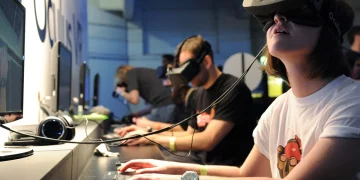
Virtual reality (VR) and augmented reality (AR) offer the most immersive digital storytelling experiences. VR allows users to enter entirely new worlds, walking through them and interacting with characters and objects, making them participants rather than just passive observers. AR, on the other hand, overlays digital elements onto the physical world, enhancing real-world experiences with layers of information or narrative.
For instance, in VR experiences like The VOID or Half-Life: Alyx, players can explore expansive worlds in a way that feels deeply personal and authentic. Meanwhile, AR applications like Pokémon Go or immersive storytelling experiences such as The Night Cafe use AR to bring stories into the physical world, creating a hybrid space where digital elements interact with our surroundings.
These technologies have immense potential for storytelling, not just in entertainment but also in education, history, tourism, and therapy. By engaging multiple senses—sight, sound, touch, and even smell—VR and AR could redefine what it means to “experience” a story.
Digital vs. Physical: A Symbiotic Relationship
The future of storytelling does not necessarily lie in choosing one medium over the other. Rather, we are likely to see a fusion of the physical and the digital, each enriching and enhancing the other. The tactile nature of physical storytelling—its emotional resonance and intimate connection—will not disappear in favor of digital formats. Instead, the two realms can coexist, amplifying each other’s impact.
Take, for example, the way books are adapting in the digital age. While many readers still prefer physical books, they are also turning to eBooks for convenience. Authors, too, are blending the two worlds, with many traditional books now being adapted into video games, films, and interactive experiences. Even theater has found ways to incorporate digital elements, using projections and virtual actors to tell stories in new and innovative ways.
Moreover, as technology continues to evolve, new hybrid forms of storytelling will emerge. The future might see readers wearing smart glasses that allow them to read a book while simultaneously seeing augmented visuals, or watching a performance that integrates virtual characters into a live setting. These innovations promise to break down the barriers between digital and physical, creating a more immersive and multifaceted storytelling experience.
Conclusion
The future of storytelling is not an either/or proposition. Both physical and digital storytelling will continue to thrive, each contributing to the overall narrative experience. Physical storytelling—books, theater, art—will remain essential, offering a depth and connection that digital formats can’t always replicate. At the same time, digital storytelling—interactive games, virtual worlds, and social media—offers a new level of engagement, interactivity, and reach.
As technology evolves, these forms of storytelling will increasingly overlap and intertwine, creating rich, hybrid experiences that merge the best of both worlds. The future of storytelling, then, is a dynamic, collaborative space where the physical and digital coexist, adapt, and enhance one another.