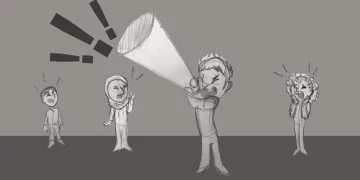













Stories have been humanity’s mirror, amplifier, and compass since the dawn of consciousness. From cave paintings in Lascaux to viral TikTok videos, the impulse to narrate, to frame experience in a sequence of meaning, is an intrinsic human trait. Stories are not merely entertainment—they are the lens through which we interpret the world, construct identity, and connect with others. But are they the ultimate form of self-expression? To answer this, we must explore the psychology, history, and evolving forms of storytelling, while examining how narrative becomes a conduit for expressing the ineffable.
The Origins of Storytelling: A Human Necessity
Long before writing was formalized, humans relied on stories to transmit knowledge, preserve culture, and navigate social landscapes. Anthropologists suggest that early storytelling, often oral, functioned as both education and entertainment. Imagine sitting around a fire, the crackle of flames punctuating tales of heroism, cunning, or catastrophe. These narratives did more than amuse—they codified values, provided moral guidance, and forged community bonds.
Stories are inherently social. Even solitary narratives, like cave art, presuppose an audience. The act of creation implies a recipient, a reflection of self through others’ eyes. Here, storytelling diverges from other forms of self-expression. While a painting or a sculpture can convey emotion, a story constructs context and sequence, giving the self a temporal and relational dimension.
Why Stories Resonate: The Psychology of Narrative
Cognitive scientists argue that humans are “story-making machines.” Our brains are wired to organize experiences into cause-and-effect sequences, often with emotional arcs and moral resolutions. Psychologists like Jerome Bruner have posited that narrative thinking is foundational to human cognition: it shapes memory, learning, and decision-making.
Stories allow for empathy at scale. Reading about another’s triumphs and failures activates neural circuits as if we were living the experience ourselves. This psychological mirroring makes stories profoundly personal and universally connective at once. In this sense, stories are uniquely powerful: they externalize internal experience, translating private emotions into sharable, digestible, and resonant sequences.
Storytelling vs. Other Forms of Expression
Art, music, dance, and fashion—all can express selfhood. Yet stories combine multiple modes of expression. Consider this:
- Art captures emotion and moment.
- Music conveys rhythm, mood, and atmosphere.
- Dance embodies emotion physically.
- Stories integrate time, emotion, character, and consequence.
Stories are multidimensional. A single narrative can incorporate visual imagery, auditory cues, and metaphorical symbolism. Unlike a static painting or a fleeting melody, stories unfold, evolve, and invite active interpretation. They allow the storyteller to manipulate plot, perspective, and temporality, creating layers of meaning that resonate differently for every audience.

Identity and Storytelling
At its core, self-expression is about identity—declaring, “This is who I am.” Stories allow us to explore, construct, and perform identity in ways that other mediums cannot fully capture. Consider the memoir, a classic mode of narrative self-expression. It is not simply a factual recounting of events; it is a selective, interpretive act, shaping reality to reveal meaning. Through narrative, we can present multiple selves: the public persona, the hidden emotional self, the aspirational self.
Moreover, fictional storytelling amplifies this freedom. Characters, plots, and imagined worlds can serve as proxies for personal exploration. J.K. Rowling’s Harry Potter series, for example, doesn’t merely entertain; it mirrors the complexities of adolescence, morality, and friendship. In creating these stories, Rowling expresses facets of her own inner life that may be impossible to articulate in straightforward autobiography.
Storytelling as a Cognitive Tool
Stories are more than art—they are cognitive scaffolds. Humans use them to make sense of chaos. Trauma, uncertainty, and existential angst often demand narrative to be bearable. Psychologists note that constructing a coherent narrative about life events can improve mental health by providing perspective, fostering agency, and integrating fragmented experiences.
Narratives are also persuasive. Political speeches, marketing campaigns, and social movements rely on story structure to shape beliefs and inspire action. A well-told story transforms raw information into digestible insight, embedding abstract concepts into memory and emotion. In this sense, storytelling is not only self-expression but world-shaping expression.
The Evolution of Storytelling
Throughout history, the medium of storytelling has evolved, but its essence remains.
- Oral Tradition: Myths, legends, and folk tales transmitted moral lessons across generations.
- Written Text: Novels, essays, and letters allowed for more introspection and permanence.
- Visual Storytelling: Cinema, comics, and graphic novels combine imagery with narrative.
- Digital Era: Video games, social media, and interactive media create immersive, participatory stories.
Each evolution expands the possibilities of self-expression. Digital narratives, for instance, enable readers or players to co-author the story, reflecting our desire for agency in both self and audience perception. Interactive storytelling blurs the boundary between creator and consumer, amplifying the reach and depth of personal expression.
Stories as Mirrors and Lenses
Stories are reflective and projective. They allow us to examine ourselves while imagining others’ experiences. Literature scholar Mikhail Bakhtin called this dialogic imagination: every story interacts with other stories, social contexts, and personal histories.
- Mirror Function: Stories reflect the storyteller’s inner life, values, and desires.
- Lens Function: Stories offer a perspective on the wider world, revealing societal norms, injustices, or universal truths.
This dual capacity explains why storytelling feels fundamentally human. It is simultaneously self-serving and altruistic—an act of sharing and shaping understanding.
Stories Across Cultures
Every culture tells stories, yet their forms and functions differ. Japanese monogatari, African oral epics, and Scandinavian sagas reflect unique worldviews. These narratives encode cultural memory, morality, and philosophy, showing that storytelling is both deeply personal and profoundly collective.
In a globalized age, cross-cultural storytelling fosters empathy and cross-pollination of ideas. Translating a story involves not only language but also worldview, highlighting storytelling’s subtle power to convey identity and perspective simultaneously.

Challenges and Limitations
While stories are powerful, they are not perfect mirrors of self-expression. Narrative structures can constrain reality, sometimes forcing complex experiences into neat arcs or endings. Storytelling also risks misinterpretation; what feels authentic to the creator may be read differently by the audience.
Moreover, the pressure to “tell your story” can become performative. Social media amplifies this, where personal narratives are curated for likes, shares, and approval, sometimes compromising authenticity.
Yet even with these limitations, storytelling remains unparalleled in its capacity to integrate emotion, cognition, and identity.
The Neuroscience of Storytelling
Neuroscientific research sheds light on why stories feel so compelling. Studies using fMRI reveal that engaging narratives activate multiple brain regions, including those involved in sensory processing, empathy, and emotional regulation. Mirror neurons fire when we read about or witness actions, making vicarious experience neurologically real.
Stories are thus a unique form of self-expression because they extend the self beyond physical and temporal boundaries, allowing both creator and consumer to inhabit multiple identities, perspectives, and realities simultaneously.
Future Directions: Interactive and Immersive Storytelling
Emerging technologies—virtual reality, AI-generated narratives, and transmedia storytelling—push the boundaries of narrative self-expression. Imagine a VR experience where the protagonist is dynamically modeled after your emotional state, or an AI co-author that adapts your personal voice across genres.
In this sense, stories are evolving from static vessels of expression into living, adaptive experiences, making self-expression more immersive, nuanced, and immediate than ever before.
Conclusion: Stories as the Ultimate Self-Expression?
Stories may not be the only form of self-expression, but they are arguably the most holistic and versatile. They allow humans to:
- Encode identity across time and space.
- Integrate emotion, cognition, and imagination.
- Connect with others while exploring private realities.
- Navigate trauma, joy, and moral complexity.
In stories, the self becomes simultaneously tangible and infinite. They are mirrors of our minds, bridges to others, and playgrounds for imagination. While a painting captures a moment and music captures feeling, stories capture the human journey itself—its chaos, coherence, and contradiction.
In the end, storytelling is more than a tool of expression—it is the ultimate laboratory of selfhood, where humanity experiments with, reflects upon, and communicates the endlessly intricate phenomenon of being alive.