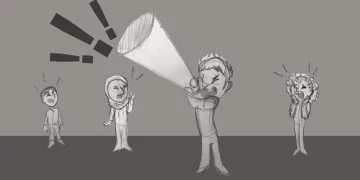













In every culture, across time and space, stories have been the cornerstone of human experience, knowledge, and communication. From ancient cave paintings to modern social media, stories have been the medium through which we make sense of the world, explain the unexplainable, and understand our place in the grand narrative of existence. But why do we need stories so much? Why can’t we simply rely on facts, logic, or raw data to understand our reality?
The Cognitive Necessity of Stories
Human beings are, by nature, storytellers. This ability to create narratives isn’t merely a form of entertainment—it’s a deeply ingrained cognitive necessity. Stories allow us to process complex information, connect dots between disparate events, and make predictions about future outcomes. When we hear a story, our brains don’t just absorb facts; they actively engage with the information, filling in gaps and making sense of the emotional and moral contexts.
Neuroscientific research has shown that when we listen to a well-told story, our brains light up in multiple areas that are involved in empathy, emotion, and memory recall. Stories engage the limbic system, which is responsible for emotions, as well as the prefrontal cortex, which helps us understand cause and effect. Through this neural engagement, stories do more than just inform—they invite us to feel, experience, and relate.
Stories as Cognitive Shortcuts
One of the reasons stories are so effective is that they serve as cognitive shortcuts. The human brain, while extraordinarily powerful, is also limited in its capacity for processing information. We can’t possibly evaluate every single piece of data or analyze every factor that might affect a situation. But through storytelling, we can simplify complex realities into digestible narratives.
For example, when we hear about a war, we’re not simply being bombarded with numbers and dates. Instead, we’re told the story of individuals, of nations, of choices, and of consequences. This makes the abstract more tangible, the distant more personal. We don’t just learn about the historical facts—we feel them.
Moreover, stories allow us to distill important moral lessons. In the form of myths, fables, or even modern novels, they provide us with a moral framework that can guide our decisions and behavior in the world. We don’t just need information—we need the wisdom to interpret it.
Emotional Connection and Empathy
The human capacity for empathy is one of our most significant evolutionary traits. It’s what enables us to understand the feelings and perspectives of others, even if we haven’t experienced their specific circumstances. Stories are one of the most effective ways to activate this empathy. By immersing us in another person’s (or character’s) journey, struggles, and triumphs, stories enable us to step outside of ourselves and experience the world from different viewpoints.

Think about the way we respond to fictional characters. A well-crafted novel or film has the power to make us feel the anguish of a character facing loss, the joy of a character falling in love, or the fear of a character navigating danger. We experience these emotions as if they were our own. This deep emotional resonance is the reason stories have such power over us—they foster connection and understanding, transcending boundaries of time, space, and even culture.
Stories as Cultural Anchors
Culturally, stories serve as the glue that binds societies together. From the myths and legends of ancient civilizations to contemporary pop culture, stories provide a shared set of experiences and values. They define who we are as individuals, as communities, and as nations.
Think of the importance of national anthems, religious texts, and cultural folklore. These stories serve not just as entertainment, but as foundational narratives that establish identity, history, and purpose. They help people understand their collective origins and envision their future.
Take, for example, the story of the American Dream. It’s not merely a set of economic principles; it’s a cultural narrative that defines the aspirations of millions. It tells a story of opportunity, hard work, and success—an ideal that shapes the beliefs, policies, and actions of individuals and the nation as a whole.
On a smaller scale, within families, stories pass down traditions, values, and life lessons. These familial narratives create a sense of belonging and continuity that helps individuals make sense of their place within a larger social structure. By passing down stories, we build shared memories and foster connections that transcend generations.
Stories and Meaning-Making
At the core of why we need stories is their power to create meaning. Human beings are inherently meaning-seeking creatures. We’re constantly looking for patterns, purpose, and explanations for our experiences. In the face of suffering, uncertainty, or joy, stories help us make sense of the world and our place in it.
Take, for instance, the stories we tell ourselves in times of crisis. When faced with loss or hardship, people often turn to religious narratives or personal stories of perseverance to find meaning in their suffering. Stories offer us a lens through which we can frame our challenges, make them comprehensible, and find a way forward.
For example, in the aftermath of a tragedy, a person might tell themselves a story of resilience, where they emerge stronger and wiser from their trials. This narrative doesn’t change the facts, but it provides a framework for dealing with the emotional and existential weight of the experience.

The Role of Stories in Technology and Innovation
In an increasingly technological world, stories continue to play a central role in how we understand and relate to new innovations. Take, for example, the way we view artificial intelligence or space exploration. These are highly complex, abstract fields that are difficult for most people to fully grasp. But through stories, these technologies are made tangible.
Movies like The Terminator or Blade Runner explore the potential consequences of artificial intelligence, weaving narratives that allow us to explore the ethical, philosophical, and emotional ramifications of this technology. Similarly, stories about space exploration, such as Interstellar or The Martian, help the public conceptualize the future of space travel and the human experience beyond Earth.
Technology, at its core, is driven by stories. The narrative of human progress, of overcoming limits, of discovering new frontiers—this is the story that motivates inventors, scientists, and entrepreneurs alike. Without the stories of possibility and transformation, innovation would lack the compelling force it needs to drive humanity forward.
The Universality of Stories
Perhaps one of the most remarkable aspects of stories is their universality. No matter where you go in the world, no matter what culture you encounter, storytelling is a shared human practice. Whether it’s the oral traditions of Indigenous tribes, the grand epics of Homer, or the viral narratives of social media influencers, storytelling transcends boundaries and is deeply embedded in the human condition.
Even with the rise of digital technology and the shift to more visual forms of communication, the core principles of storytelling remain the same. The format may change, but the human need for stories, for shared meaning, connection, and understanding, remains unwavering.
Stories and the Future
As we move further into an age of AI, virtual reality, and genetic engineering, stories will become even more critical in helping us navigate the complexities of the future. New technologies, new ethical dilemmas, and new social challenges will require new narratives to make sense of them.
Consider the potential of virtual reality storytelling. By placing the audience inside a narrative, immersive VR experiences could take storytelling to new heights, allowing people to experience stories not just through the eyes of a character, but through their own senses. This could have profound implications for empathy, education, and the way we understand complex issues like climate change, social justice, or mental health.
Similarly, as genetic engineering and biotechnology progress, stories about the human body, identity, and the limits of science will likely become more relevant. Just as Mary Shelley’s Frankenstein explored the consequences of scientific hubris, future stories might grapple with the ethical implications of gene editing, cloning, and the boundaries of human enhancement.
Conclusion
In every form, from ancient oral traditions to modern films and digital media, stories are an essential part of how we make sense of the world. They help us process information, build empathy, understand our place in society, and find meaning in our lives. As we look toward the future, storytelling will continue to play a pivotal role in shaping how we understand the complex challenges ahead.
Whether in the form of books, movies, or digital experiences, stories will remain one of the most powerful tools for helping us navigate the ever-changing world. After all, it is through stories that we connect to each other and to the world around us.